Angry

Raging feminist thoughts from my purple bedroom (a bit of a book review, a bit of an improperly sourced essay, way too long to be a blog post but here we go anyway).
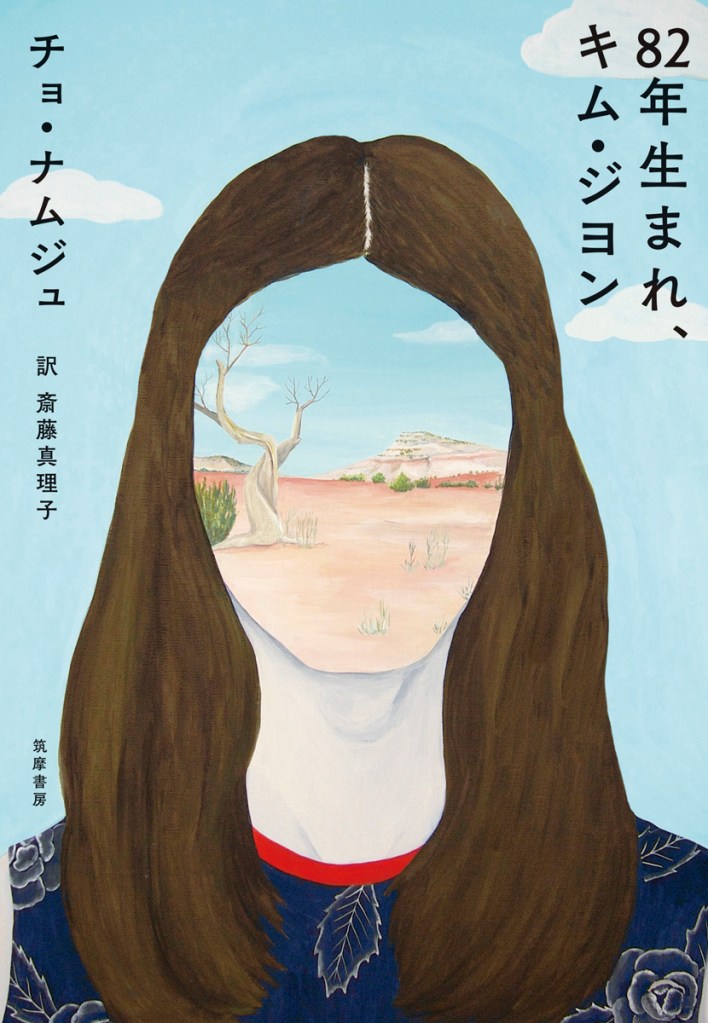
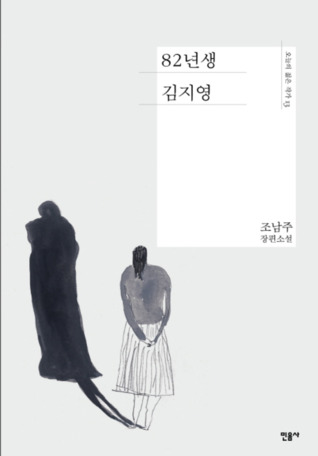
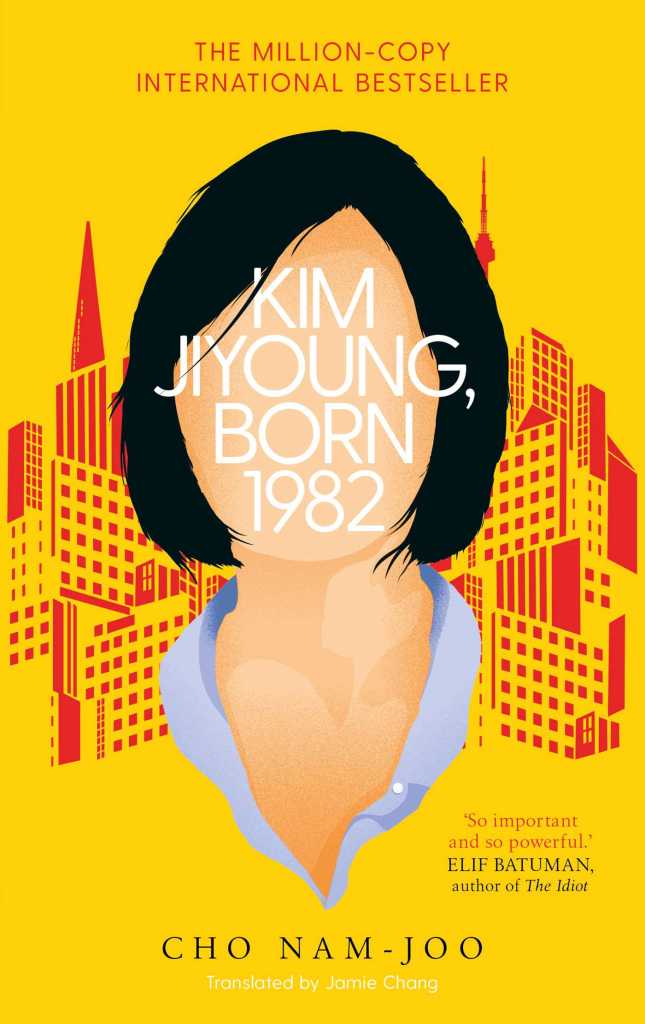
I am angry. I just finished reading Kim Jiyoung, Born 1982 by Cho Nam-Joo. A novella that reads almost like an exposé, interspersed with statistics like South Korea’s 63% gender pay gap, Cho details the life of a single Korean woman from birth into motherhood. I found myself noting down the countless small moments of sexism Jiyoung experiences, empathizing, then chiding myself for elevating my small struggles. Among the “microaggressions” Cho describes, we see sexual harassment on a bus, teachers lifting girls’s skirts at school, a hidden camera in a women’s bathroom, favoritism of Jiyoung’s younger brother, and an abortion because Jiyoung’s mother can’t bear the embarrassment of having a third daughter instead of a son.
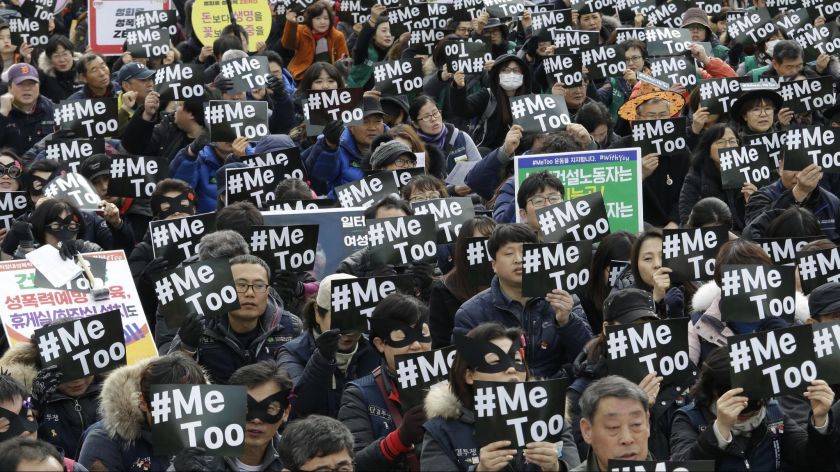
Kim Jiyoung, Born 1982 was published in 2016 in Korea, a couple months after a man stabbed to death a woman in a public restroom. He had never met this woman before. He claimed he committed the murder because he hated women and because he hated being ignored by women. In the wake of this hate crime and the printing of this book emerged the Korean #MeToo movement. Actresses, business execs, and students began to come forward with their stories. But while the movement sent a couple famous men to jail, Korean singers and actresses who voiced their support or even mentioned the book Kim Jiyoung, Born 1982 were “cancelled” on social media, and widespread backlash arose. Feminism is a bad word in Korea. Feminism is a bad word, period.

(A related NYT article: A Common Trait Among Mass Killers: Hatred Toward Women)

Kim Jiyoung, Born 1982 is written in unadorned prose; it is a book on a mission. I urge you to not be deterred by the blunt writing and the sometimes stilted translation. It is a short book and it is well worth the read. When I heard that this book helped fuel the flames of the #MeToo movement in Korea, I expected a story of sexual assault. There is no blazing climax here; instead, layer upon layer upon layer of the common injustices of the everyday build up to outline the everyday struggle of the everyday woman.

Kim Jiyoung, Born 1982 tells the story of a woman in present-day Korea, a country that is thriving economically but steeped in a tradition of misogyny. There are many moments in Cho’s novel that feel familiar to me as a Korean-American woman and in the stories my mother has told me. But there are also moments that feel much farther from my life: the numbering of boys ahead of girls in school, the cameras, the way wives call their husbands “oppa” (older brother), the abortion, the pain of pregnancy, the mother quitting her job to take care of her child. Perhaps not so far.

I wonder, as Cho appears to wonder as well, whether a man can read this book and understand even half of the struggles Jiyoung goes through, can see the underlying tradition and sexist institution that underlies each of her actions. Perhaps it all just feels normal.


I also recently read Making Motherhood Work by Caitlyn Collins, a book that investigates the lives of middle-class women in Sweden, Germany, and Italy.

In Sweden, women are happy and successful in combining a career and motherhood. Families are given 16 months of paid parental leave meant to be divided evenly, with 3 months specified for each parent that cannot be used by the other parent. The term “working mother” is unknown because there are no “stay-at-home” mothers. Childcare is universal and highly valued. The state has idealized gender equality through social policy and cultural norms have changed within a generation.

I read this and was amazed.

Then I read the section on the United States. Many of the women interviewed broke down into tears while describing the difficulties they’d faced over the years.  The United States doesn’t even have any sort of work-family policy or paid parental leave (for mothers or fathers!), and even vacation and sick days are not required; ideologies of the “ideal worker” compete with the model of intensive motherhood.

I read this and was depressed. Collins describes how “women’s choices and ambitions are shaped by what they feel is possible” (39). My own dreams were inflated then torn down as I read this book. I want to become a mother and I want to be a chemist, and I have no idea how I will do both in the future. As I read about Sweden I was hopeful. As I read about the United States, I settled into reality. As I read about Korea in Kim Jiyoung, Born 1982, I became angry.

A mother in the United States who went back to work only weeks after giving birth told Collins, “Before I had children, the message that I received was, “I am woman, hear me roar. You can do everything. You can be at the top if you put your mind to it… Load of crap. I am awesome, and I can’t do everything. If I keep all the balls in the air, I’m broken. What’s going to fail is my health. While I was doing all that, I was also suffering debilitating migraines. I’ve talked to so many friends in a similar position and we can’t figure out how to do it all at the same time.” (198)

Cho writes, “The world had changed a great deal, but the little rules, contracts and customs had not, which meant the world hadn’t actually changed at all” (119).

Kim Jiyoung quit her job that she enjoyed to become a mother, because of course, because she made less money than her husband, because of the gender pay gap, because even though Korea (and the US) appear to be becoming more gender-neutral, they are not even close to gender-equal. Unlike her mom who worked in factories to put her brothers through college, Jiyoung actually gets to go to college herself and work a professional job, but still, Jiyoung becomes her mother. She is seen as a lazy housewife, even though she wanted to work, even though she spends hours cooking and cleaning and taking care of her daughter.

(A related song: Mama by Raveena)

I know that I’m not a mother and unlikely to become one for a long time. I know I’ll grow up and grow into complacency, cynicism, can things really change? But I am inspired by Sweden’s mothers and fathers, and I am angry for women in Korea and the United States, for women in countries where woman are not allowed to drive and where genital mutilation is still legal. I am angry and I hope to stay angry.


A reading list: Kim Jiyoung, Born 1982 by Cho Nam-Joo, Making Motherhood Work by Caitlin Collins, Half the Sky by Sheryl WuDunn and Nicholas Kristoff

Juliet
A girl in limbo

First, my sincerest apologies to my fellow M-trainers and the followers of this blog that this is my first post. This semester has not gone as planned in nearly any way, unfortunately including my blog participation.

I had a realization today on a run (it’s amazing the epiphanies you (think you) have when the endorphins start pumping): I calculated that I’ve been “in limbo” for a full month now.

I had an amazing three weeks in Argentina and I truly wouldn’t change anything if I were to do it all over again.  At the same time, since day 1 jokes about the coronavirus were followed by “knock on wood,” and only one week into the program Columbia University sent out an email demanding all study abroad students come home (they recinded this email two days later, only to send out again in another two weeks).  The result was that we were constantly living on the edge. I remember texting my friends “I’m afraid to check my email.” Adjusting to another country, another language, four (yes four!) new universities would be enough of a challenge, but it’s that much harder when there’s a voice in the back of your head (or literally just someone talking to you) threatening that it all could end at any moment.

So when the email finally came that we did in fact have to come home, a small part of me was relieved (while a large part of me was crushed and devastated).  If nothing else, at least the life in limbo was behind me. Or so I thought.

Since that day, I have been trying to withdraw from my program, leaving beautiful Argentina and all the opportunities I was robbed behind me.  I would love to be spending this time focusing on how to enjoy a very weird “break” from life, such as by taking time to reflect and recharge. Instead, I have spent the past two weeks emailing, calling and researching, as I try to get a refund on my tuition so I can justify withdrawing from the program.  All the meanwhile, my classes have continued. So for the fourth week in a row, I pass the time in class in limbo, unsure if I will be back next week.

All this is to say, for a person with a type-A personality who’s had every week of her life planned at least 3 months in advance for the past 3 years, this limbo life is getting to me.  I’ve been doing my best to “roll with the punches” as they say — be resilient, be positive, be grateful (which I am!). Despite my best efforts, the planner in me wants a schedule, a plan, a settled goal for these next 4 months, and the buzzing search for this resolution is starting to wear me out. 

Needless to say, I am grateful to be home safe and healthy, surrounded by family and finding new ways to keep in touch with friends.  I know I am not the only one upset with how the semester turned out, or the only person looking for some clarity on how the next 4 months will go.  But I’m definitely a part of both those groups, and as much as I need to be grateful and cognizant of the larger problems around me, I also need to be honest with how I’m doing right now. Wish me luck, M-trainers 🙂

Jamie

Asleep

Did I vow to write a blog post every week? Yes, but time moves slower (faster?) when you never leave the house.

Inspired by a conversation with a friend.

What do I miss most about New York City?
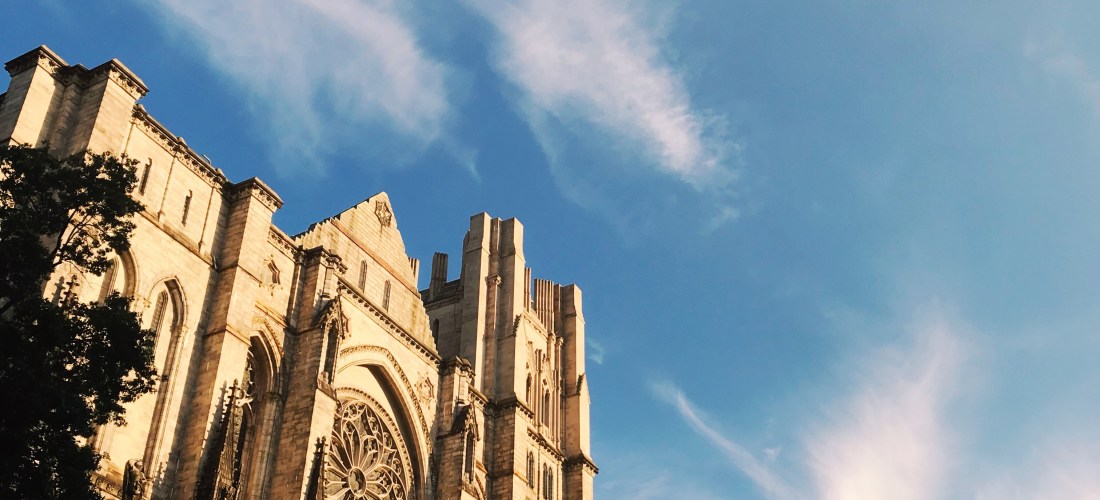
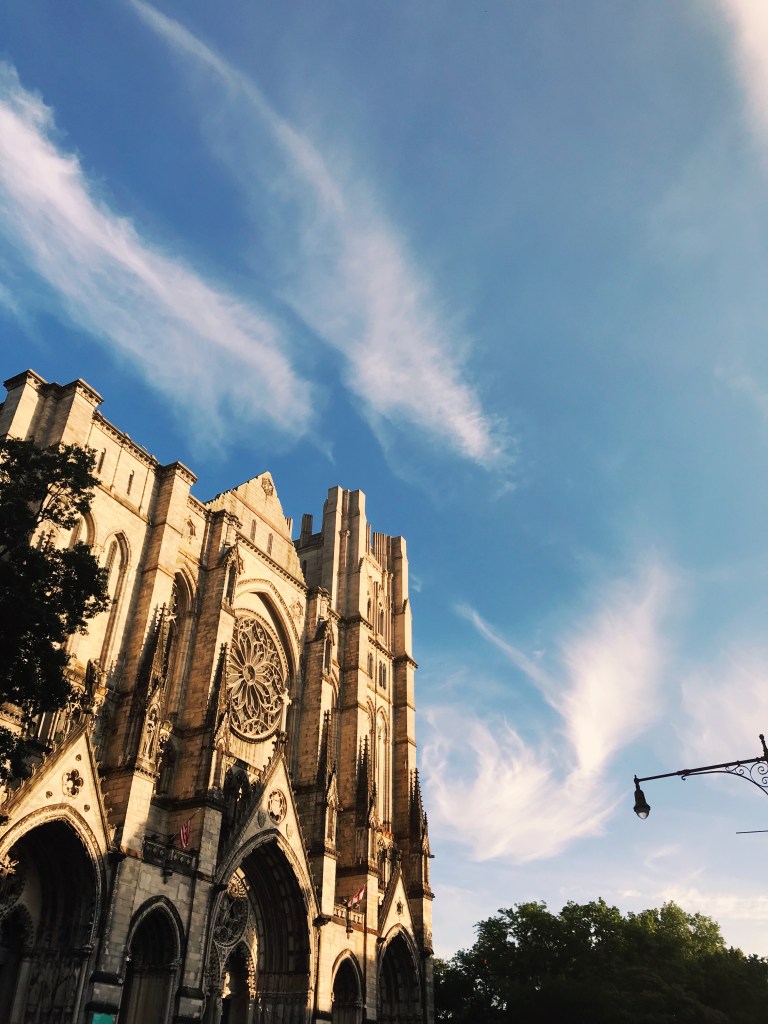
I miss the way that sunlight hit St. John the Divine as I walked home from the library.
I miss the strangers who would ask me for directions or money on the sidewalk.
I miss staying up too late talking about nothing and everything and life beyond and life now and life past.
I miss bumping into people on campus and wondering whether I should wave or stop or smile.
I miss the walks home at 2am in the dark
When I didn’t feel unsafe
Because I wasn’t the only one awake.

What am I grateful for about home?
I am grateful for dinners cooked by my mother.
I am grateful for my little brother who wakes me up for my 7am zoom class even when I decide to skip it.
I am grateful for flip flop weather and fresh mangoes and endless banana bread.
I am grateful for a room of my own and a bed that is occupied for more hours out of the day than not.
I am grateful for sleep.
Have I ever slept so long? So often? So deeply?

From Eleanor Oliphant is Completely Fine by Gail Honeyman: “There are days when I feel so lightly connected to the earth that the threads that tether me to the planet are gossamer thin, spun sugar. A strong gust of wind could dislodge me completely, and I’d lift off and blow away, like one of those seeds in a dandelion clock.” 

I’ve been listening to tiny desk concert after tiny desk concert and also the entire soundtrack of Les Miserables, which will be my favorite musical until the end of time. I think I’ll make new playlists this week but this is the one I’ve been listening to most these days. The spotify embed is pretty fancy.

Dear m-trainers and readers, what have you been listening to these days?

Juliet

Spring

I am grateful for the spring, for the bundles of green that exploded last night from the white, five-petaled fireworks that exploded a week ago from the buds of the cherry trees lining the familiar Georgia backroads after that haphazard March rain; the early azaleas, flaunting their pinks and reds and whites before they are swallowed, wilted, by the mud; the glimpses of life appearing first slowly, and then quickly, as I watch, for the last time in my life, this familiar backdrop as it morphs from late-winter to mid-spring to quasi-summer, snake season, backyard barbecues and the screams of liberated children borne across the neighborhood by the humidity.

I am grateful for how deeply I have fallen in love with running and with the weightlessness and mental clarity that accompany the rhythmic pounding of my Asics (sponsor me, please) on the asphalt, mud, gravel. Running is what has allowed me to live in the moment, and I am thankful that I have been blessed with both the time and the physical capacity to engage in it. 

I am grateful that I am able to continue my studies, that I have, in the first place, studies to continue, that I have discovered my passions, that I am able to pursue those passions. 

I am grateful for my friends, new and old, those who made my experience in Italy beautiful, those who I have returned to (and socially distanced myself from), those I have had to hug from thousands of miles away.

I am grateful to Italy for one of the best months of my life, for the strong and kind people I met there, especially those who have now been pummeled by the situation, the (abundance of gluten free) food, the general openness and laidbackness, and for instilling in me a little piece of the “dolce far niente” mindset I find so ideal. I will be back. 

I am especially grateful for my family, for their fearlessness in the light of the unknown, in awe of my mother’s willingness to uproot her life and career, proud of my younger brother for his ambitions and of my dad for getting his dream job. I am grateful to have a family to come back to, a beautiful home and beautiful trees and plentiful food. I cannot not be grateful. 

And I am. I am grateful. I am eternally grateful, but I am drowning in this global situation. Drowning, because it is everywhere I look, everywhere I open my ears. Yes, this is cataclysmic. Yes, it is terrifying. Yes, we could be doing better. Yes, but. 

Yes, but I am so lucky. I feel so affected precisely because of how fortunate I am, because this is the most immediate thing in my life right now, and it is so unfathomable to me that something this upending could happen to me. I’ve found myself forgetting that I am fortunate that this is not a more deadly disease, that I am free, that I do not have to worry about having enough food or water or having a place to sleep or having a support network to fall back on or having clean air to breathe and (presumably) a long and relatively carefree life ahead of me. Those ultimately most profoundly affected by this situation will be those more disadvantaged or vulnerable than myself.

What have I done to deserve this good fortune? Yes, things will probably get worse, but they will eventually and undoubtedly get better, because I am, even in the midst of a pandemic, better off than most. I wish there was something I could do to alleviate the suffering, to spread a little bit of my good fortune to those who need it right now (alas, I wish but do not act). 

Since my return from Italy, I have thus spent a surprising amount of time reflecting on the aspects of my life I am most thankful for. I was at first confused. Why was I not angrier at life? I should’ve been furious, unable to concentrate on my boring suburban life, mourning what I had lost. Upon hearing that I would be sent home, I was angry, I did mourn. I mourned deeply and slowly, but these emotions were directed more at the misfortune of my personal situation than at any deep-set misery. Selfishly, once I realized that my predicament was not personal and was instead a universal situation, I wiped away my tears. I felt very much not alone. 

But it was only when I understood I don’t got it bad, I got it good, it was only when I understood this that the gratitude began flowing from my fingers and dripping from my mouth, exploding, like the blossoms from the cherry trees, from the very core of my being. 

~Soph

her tear

Free refill for tears these days. 


My parents told me the story of a whole family being engulfed by COVID-19. The grandma was the first to contract the virus, died in a few days. Then the dad got sick, followed by the mom – both were sent away as soon as they tested positive. Before the kid died, he was the only one at home and the only one alive in the family. He was holding a family portrait till the last second of his life. Even for many of the young ones that are lucky enough to survive, chance is that they are orphaned. Stories like such sound like dark mythologies that are meant to scare children. 

Interestingly, even though I have been very emotional while watching all the movies and shows, I have not spared a tear to my own situation under corona, yet. I was more lost than upset. I felt disoriented about the coming months, most of which will be spent in my 135 square feet (12.5 m^2) dorm room, and I’m supposed to still “go” to classes, get good grades, work out, entertain myself – basically functioning as a normal human being despite the chaos. 


Maybe the key reason why my tears haven’t given in by far is that I’m seeing my entire family in China going through the same thing. Their battle has almost come to an end, and we just geared up. It is quite unfair for my parents to trek though the same battlefield twice, once physically and once mentally. To some extent, they are more anxious about me choosing to stay in New York than myself. After all, Americans have just started to understand the importance of social distancing and many of them are still refusing to put on cautionary measures when out on the street. It’s depressing how people really need to see things alarming enough to prevent further tragedies. Being one of the stubborn and optimistic (or dumb) ones before, I finally conceded to my parents, “I won’t go breathe the fresh air unless I have to buy groceries.”


When things were just starting to get worse, and I finally pressed the cancel button in my head for our trip to Nashville, I began to make my alternative Spring Break to do list, hoping that it’d calm my restless body at 1:30 AM. Immediately, I knew that this is the prime time for me to go back to the arts. Photography has always been with me in college, but I haven’t done any sketches, paintings, installations, or collages. Installations and collages were my favorite when I was an IB Art kid, but if COVID has taught me anything so far, it is to always think about the long term. Moving out with 3D art pieces every summer is simply too much a hassle. I already made a family friend babysit my cactus over the summer (speaking of which, I just realized that I never took her back from her cactusitter..) 


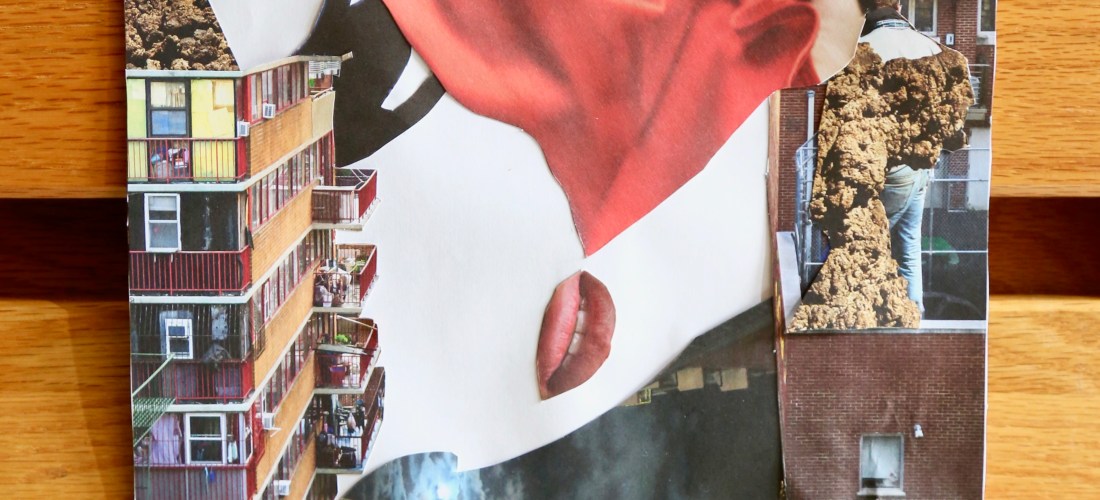
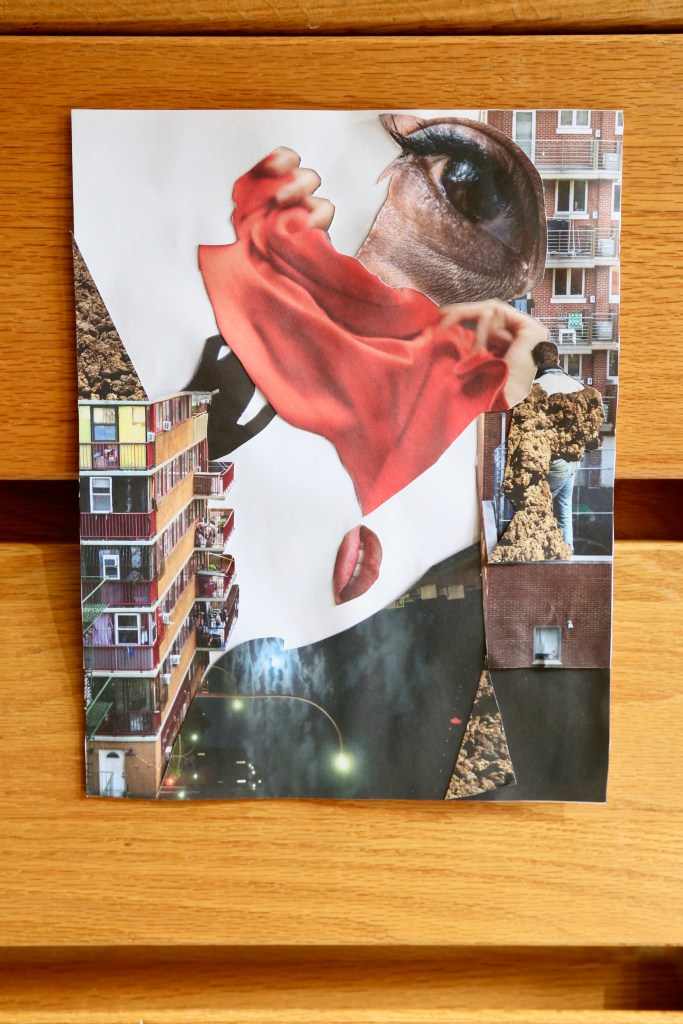
Collages could perfectly express my state of mind right now. Life is a zillion different pieces at this point, and I’m trying my best to put everything together. The goal is to find harmony in a dystopia, and, on the bright side, we probably also has a zillion ways to orchestrate them. 

I gave myself a challenge – to find all the pieces for my collage in one single magazine (thank you ICP). Ironically, this constraint actually sparkled more creativity. Because I couldn’t always find the elements in my mind, I had to seek alternatives to express the same feeling. For example, my hunch was to put a large piece of ocean/water image at the bottom, but the magazine was simply not watery enough. Instead, I found this gloomy piece of sky that is adorned by dots of lights. To keep it close to the idea of water, I gave it a wavy edge. If you look careful enough, you could see a tiny red glove/stop sign up in the night sky. I have no clue how it was captured in the original photo, but I know it wasn’t random. This subtle yet also obtrusive red hand was the reason why I decided to use this sky in the first place.


The collage is quite urban because pandemics always hit cities the hardest. I have pretty much spent my whole life in gigantic cities that are buzzy all year around. Photos of empty streets and closed businesses break my heart, so I want to make sure that this collage still reflects some liveliness of an urban setting.


I realized that I didn’t quite give a concrete explanation of this work, but why do we have to define everything. However, I do want to hear your interpretations and share your burdens, so hit me up. 

thinking about my masseuses and sending love to everyone

Cherrie

scoby

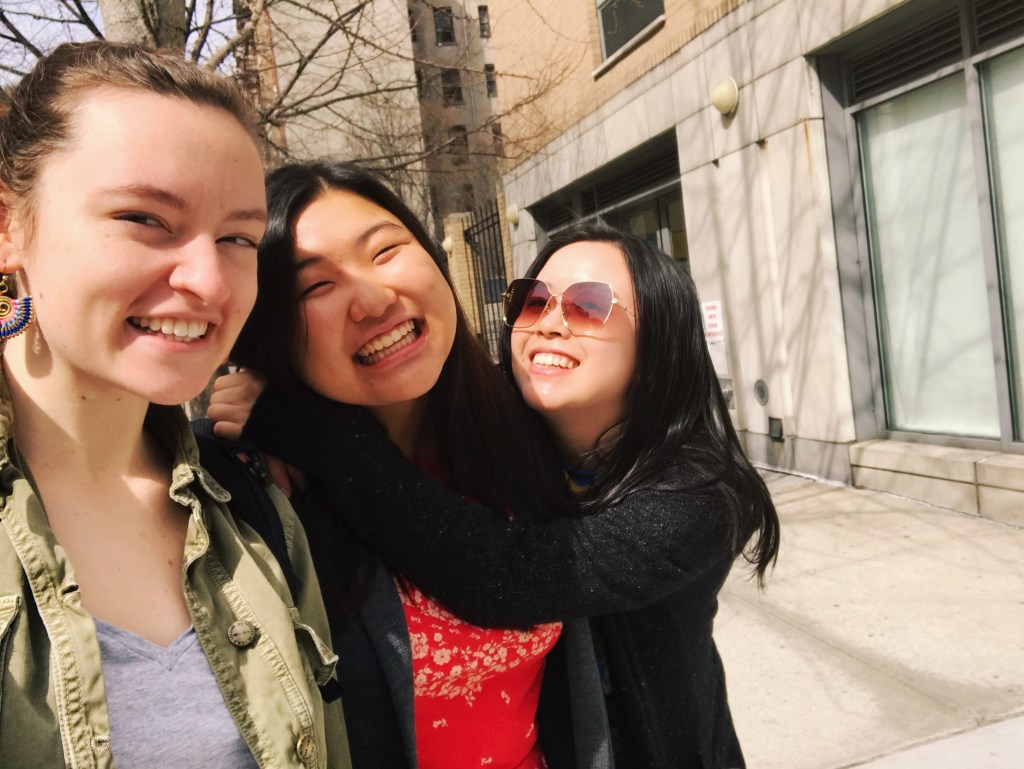
The last picture of me and Cherrie and our dearest friend Annie that will be taken for a very long time.

Hullo. It has been a while, yes. If you’ve been following along- I don’t know who you are, but we appreciate you. Please don’t leave.

A lot has happened *coughcoronaviruscough*. We are no longer on three continents. School is online, and so is this friendship. Funnily, that is why we started this blog to begin with.

As I sit down and try to collect my thoughts into something cohesive, I continue to be struck by how strange this past week has felt, how unique this situation feels. The way we can communicate instantly with each other, the speed of news and of institutional changes, how technology has enabled mass hysteria and yet also given us the tools move on with life despite disaster.

But also it’s not unique. Disaster certainly isn’t. And neither are the thoughts in my head, the confusions, anxieties, frustrations, wonders, hopes.

Yet even though I know that, I feel the need to express my thoughts, to tell someone how I feel, to throw in my own two cents. I want to say something too. I want to put my thoughts somewhere because perhaps, deep down, I do think that I have something to add to this great big universe.

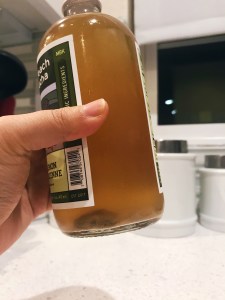
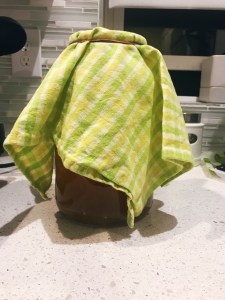
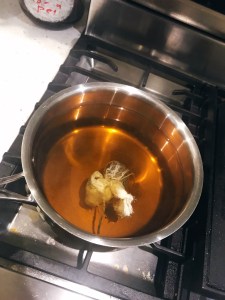
For today, however, my thoughts are still quite muddled. So instead of saying anything profound, I have decided to fulfill my identity as a very-extremely-privileged-almost-millenial-bon-appetit-watching-Californian-chemist-woman, and make kombucha.

Do I like to drink kombucha? Not yet. It is kind of weird.
Will kombucha make my stomach happy and clear my skin and mind? Most likely not.
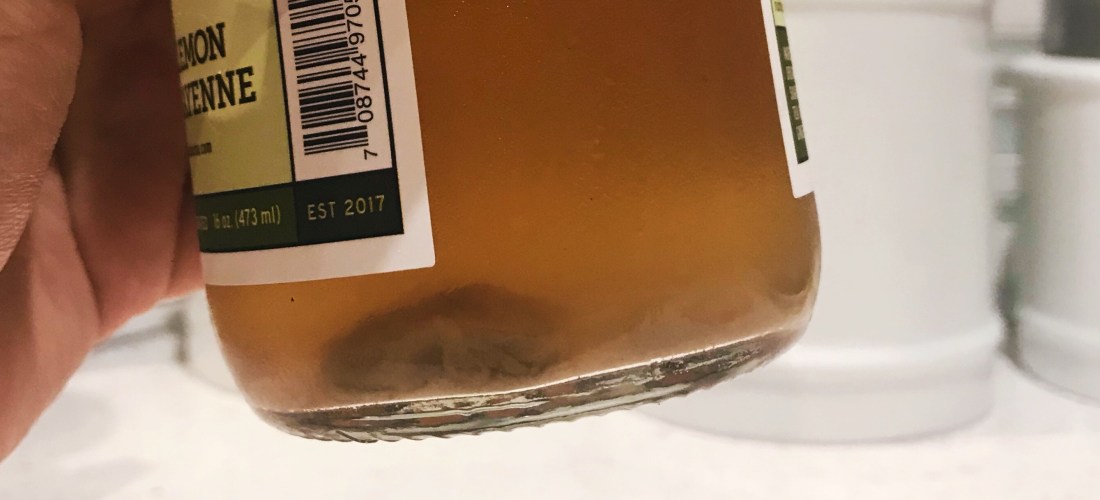
Have I been reading about kombucha for the past hour, including a scientific paper that described making kombucha as “inoculating” tea with bacteria culture in a beaker, and is that kind of exactly what I do in lab, and am I now extremely excited about making my own scoby (symbiotic culture of bacteria and yeast) and will I tell you all about it? YES.

I can’t wait for the massage train to all drink kombucha together, and I do apologize if until then this becomes a food blog. On a slightly related note, I have been writing this post while being distracted by the “Don’t Call It Curry” episode of Ugly Delicious and I am now very hungry.

Juliet

On expectations and subversions

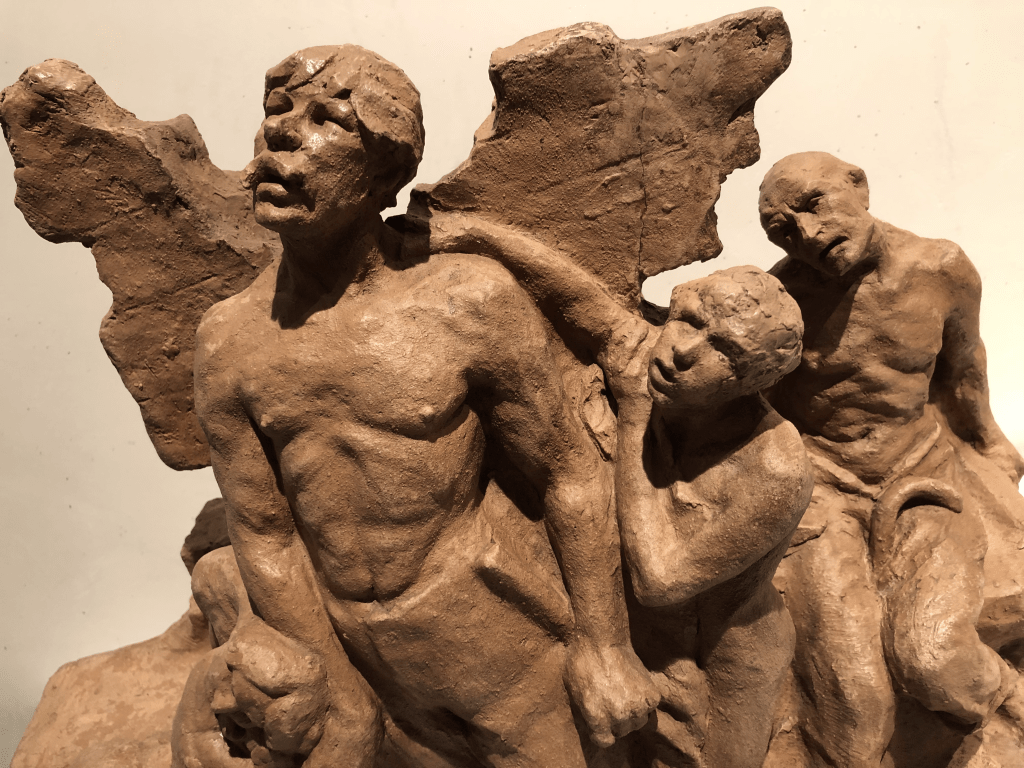
Rene Pajot, Famille en exil, 1920; dalla mostra “INCONTRO E ABBRACCIO”

I am at a point in my life where it seems like nothing is constant. Life has been diminished to a series of endless uprootings and relocations, farewells, novelties. However, although I am left sometimes with an intense longing for stability, I have grown exceptionally good at living out of a suitcase, and, for better or for worse, I have lost the ability to develop expectations.

This idea would not be strange to me if I did not remember each of my birthday parties growing up, with the accompanying anticipatory excitement and the calculated scheduling of pin the tail on the donkey and present opening, and, more recently, the months leading up to freshman year of college, when all I could think and dream about was the glorious life of a university student and the friends I would make and the life-changing experiences I would have. At some point, I unconsciously became tired of my expectations being shattered.

I think it was probably a slow process. My family moved cities a few times when I was younger, and each move warranted a drastic shift in my definition of home. College is but a longer series of shifting definitions, and at some point, expecting becomes draining.

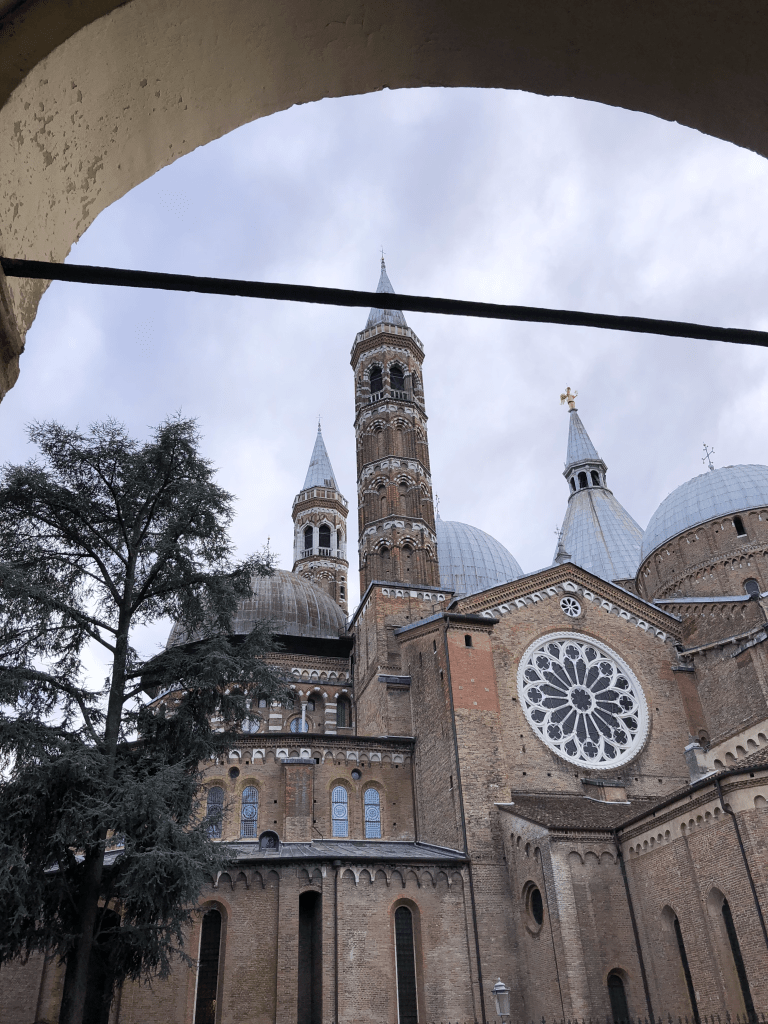
La Basilica di Sant’Antonio di Padova

All of this is to say that I thought very little of the months to come when I sent off my study abroad application. Until I trudged behind the other program participants into the foggy abyss of the Venice airport parking lot, I had, somewhat terrifyingly, not thought about the immensity of my decision to live in Italy for four months. I went into this knowing no one and having only researched the area enough to know that it had at least one church and that my homestay was an 8 minute walk from the Boston University campus.

Thus, despite my lack of expectations, my non-expectations were turned on their head. This small city in the north of Italy is, for lack of a better word, a gem. I never imagined that I could so quickly and completely fall in love with a place.

On the one hand, the beginning hasn’t been easy: my Italian is still sub-par– I find myself struggling to find words at dinners with my host family, instead sometimes choosing to remain silent– the city is unfamiliar, and I have yet to develop a routine. The familiarity of the european-ness is counteracted by the immense gap between Swiss and Italian cultures, and I find myself sometimes feeling nearly as helpless as I did in Israel this summer.

On the other hand, though, this first week has been (kicking myself for becoming the cliched study abroad student I have always disdained) more rewarding than I could have ever imagined. I have not only found myself drastically reshaping my concept of Italy but also piecing together scattered parts of my own identity.

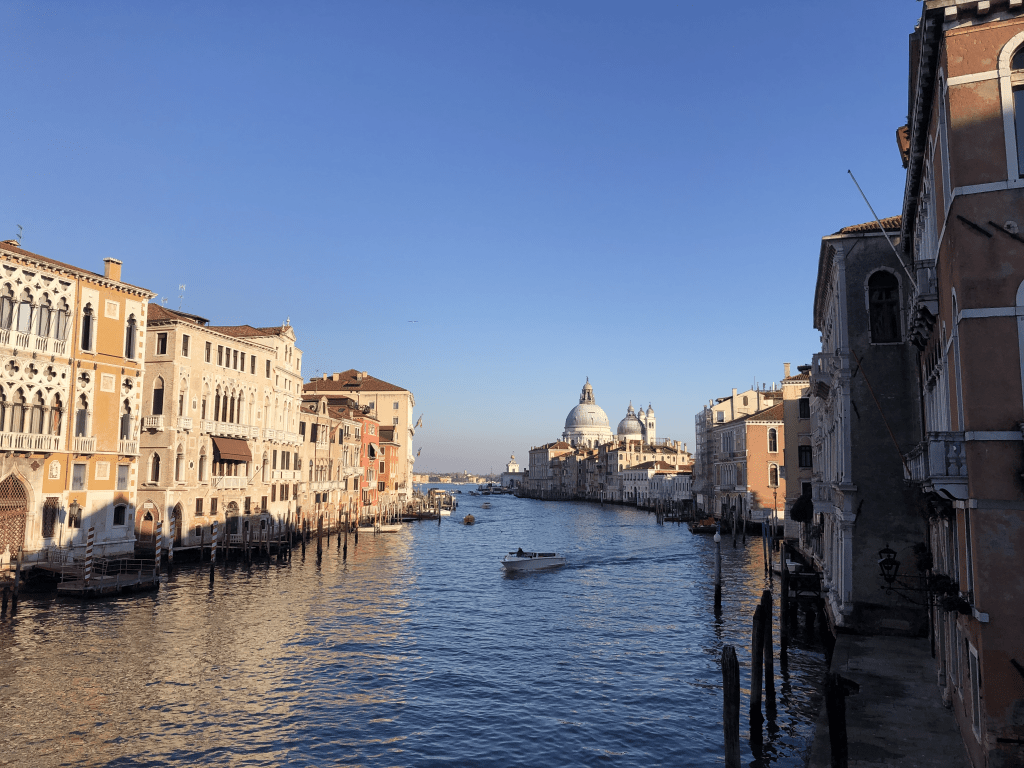
Grand Canal (?), Venice

It has also felt like so much more than a week. I have made close friends, found what is likely the best gelato in the world, watched the sun set over the rooftops of Venice, seen the balcony from which Juliet uttered a famous monologue, speedwalked through Canova’s birth house, rediscovered coffee, been adopted by the loveliest of Italian families, stood mere feet away from the Italian president, familiarized myself with the twisting streets of the city center, decided to go to Austria on a whim, continued (much to my surprise) practicing violin and running, eaten at a university dining hall with Real University Students, imbibed my first (and second and third and…) Aperol spritz, eaten not one but TWO gluten free pizzas, entered the Basilica of San Marco, a church I had never imagined I would ever see in person, and come to terms with not being able to zone out during lectures in Italian.

Oh, the bliss of not expecting.

~Soph

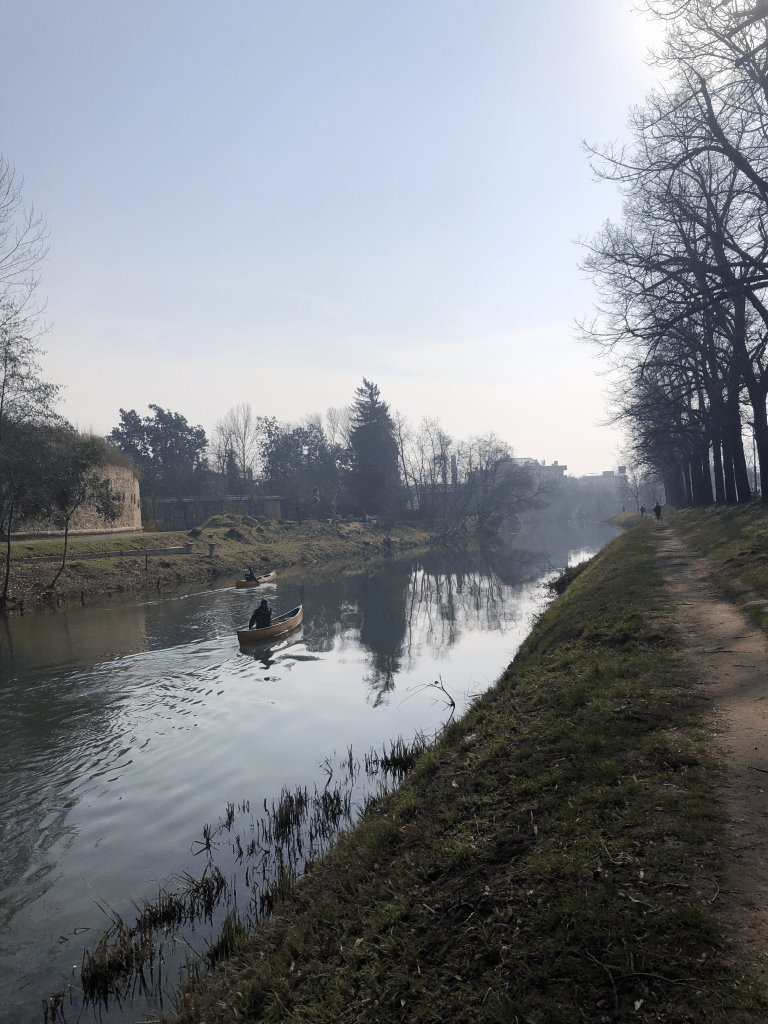
The locale of my runs
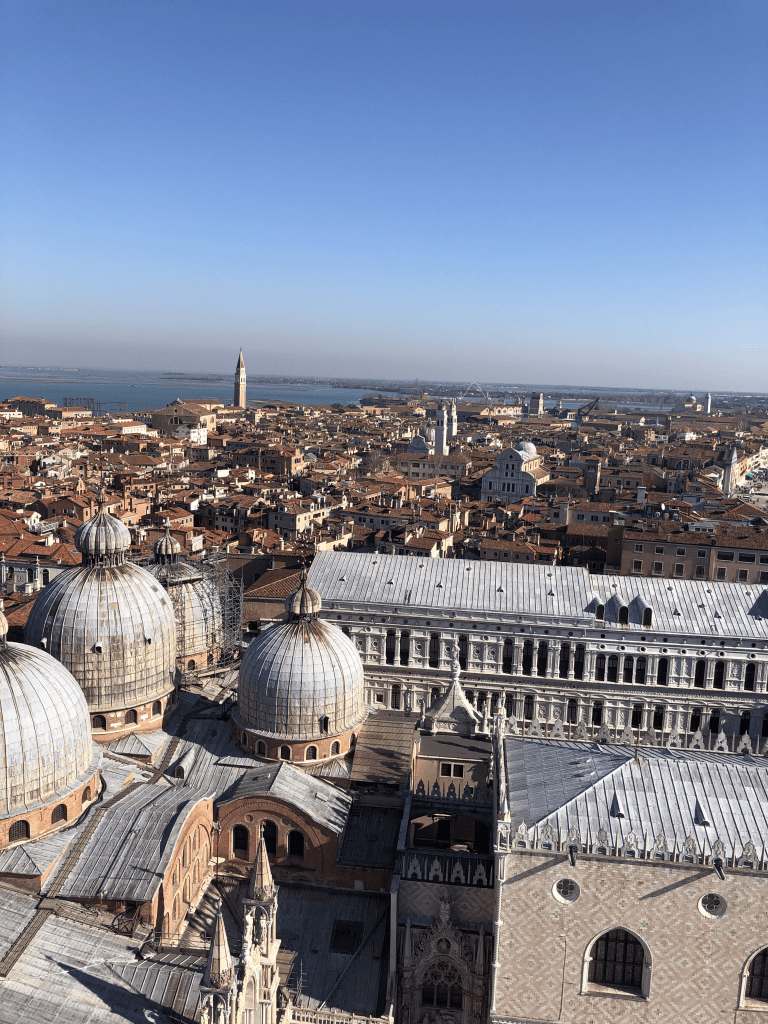
View of Venice and San Marco from il campanile
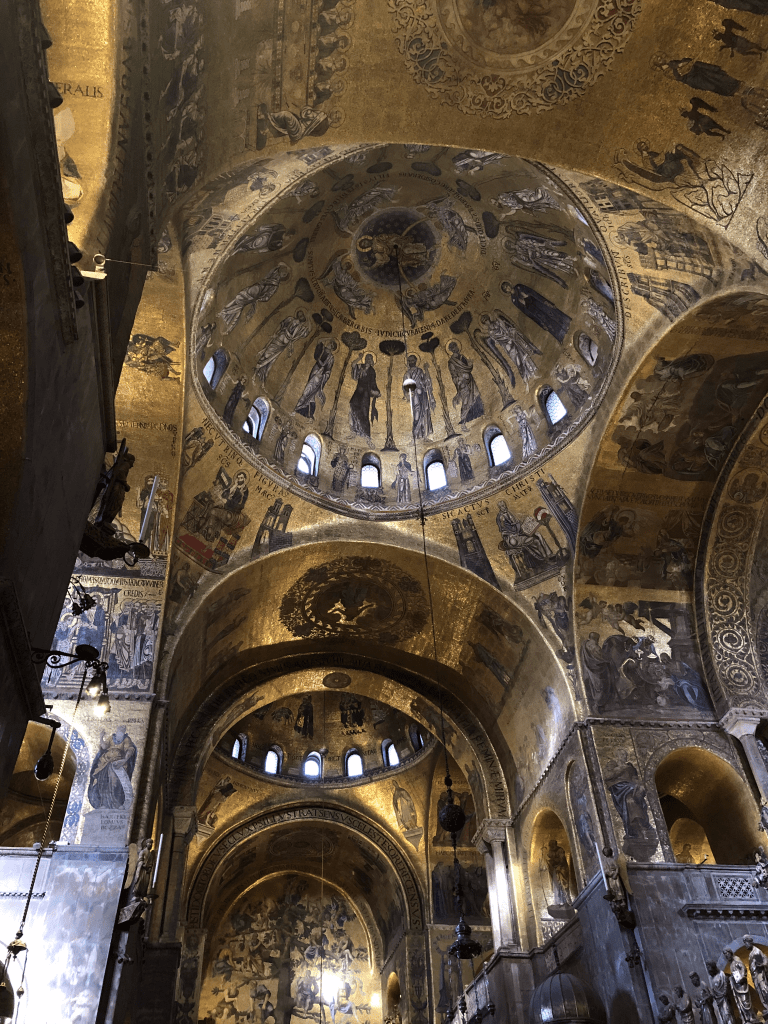
An illegal photograph of the interior of the Basilica di San Marco

on friendship

This is Cherrie. She is wise and curious and she makes me laugh. She is a good friend.

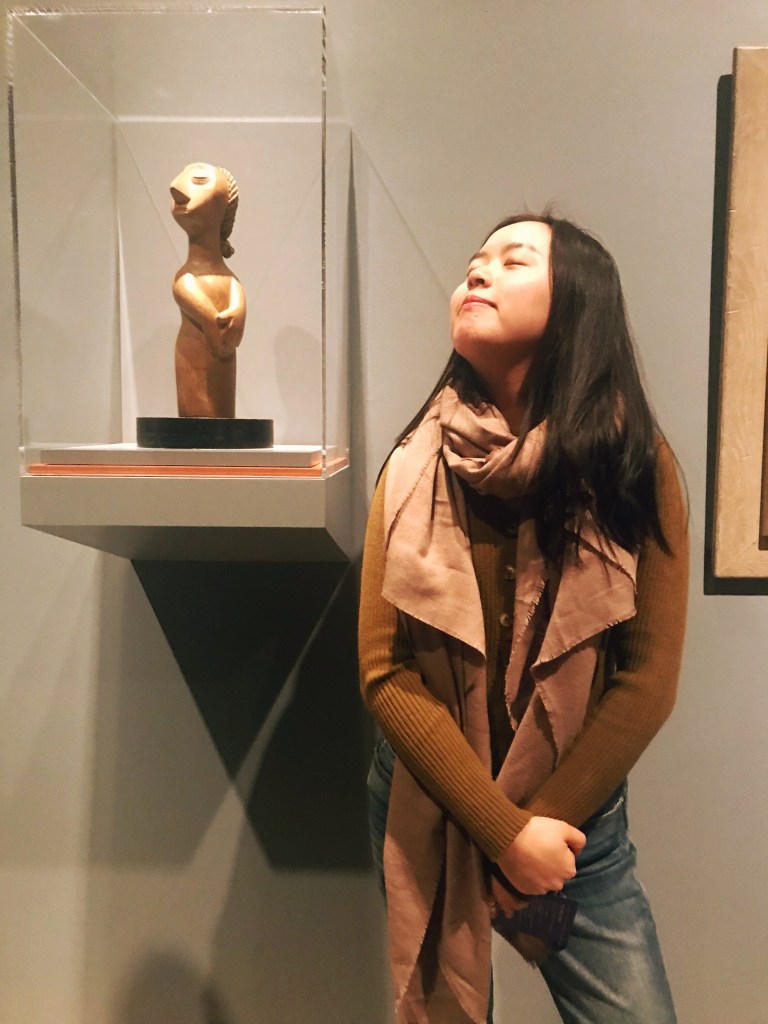
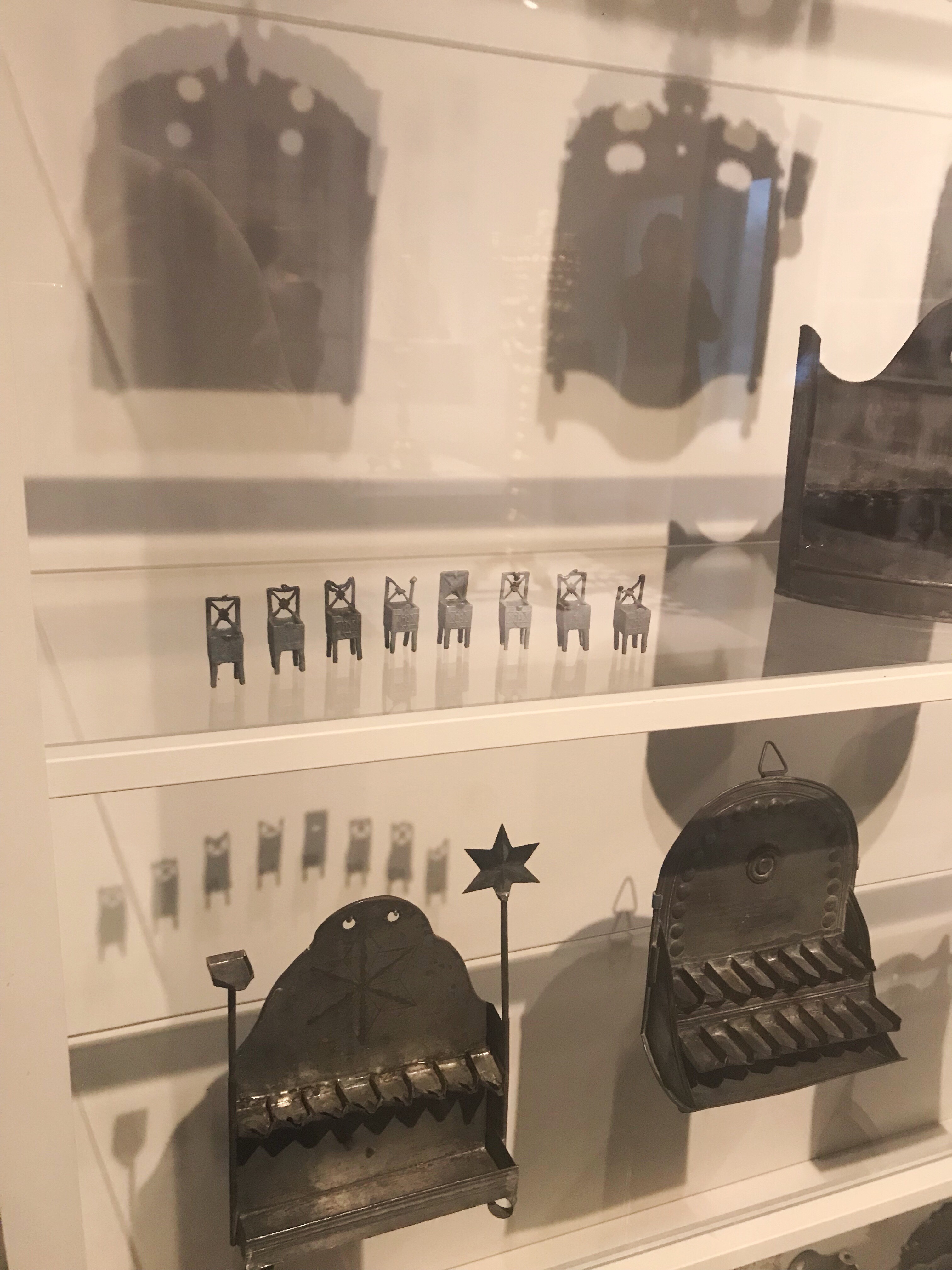
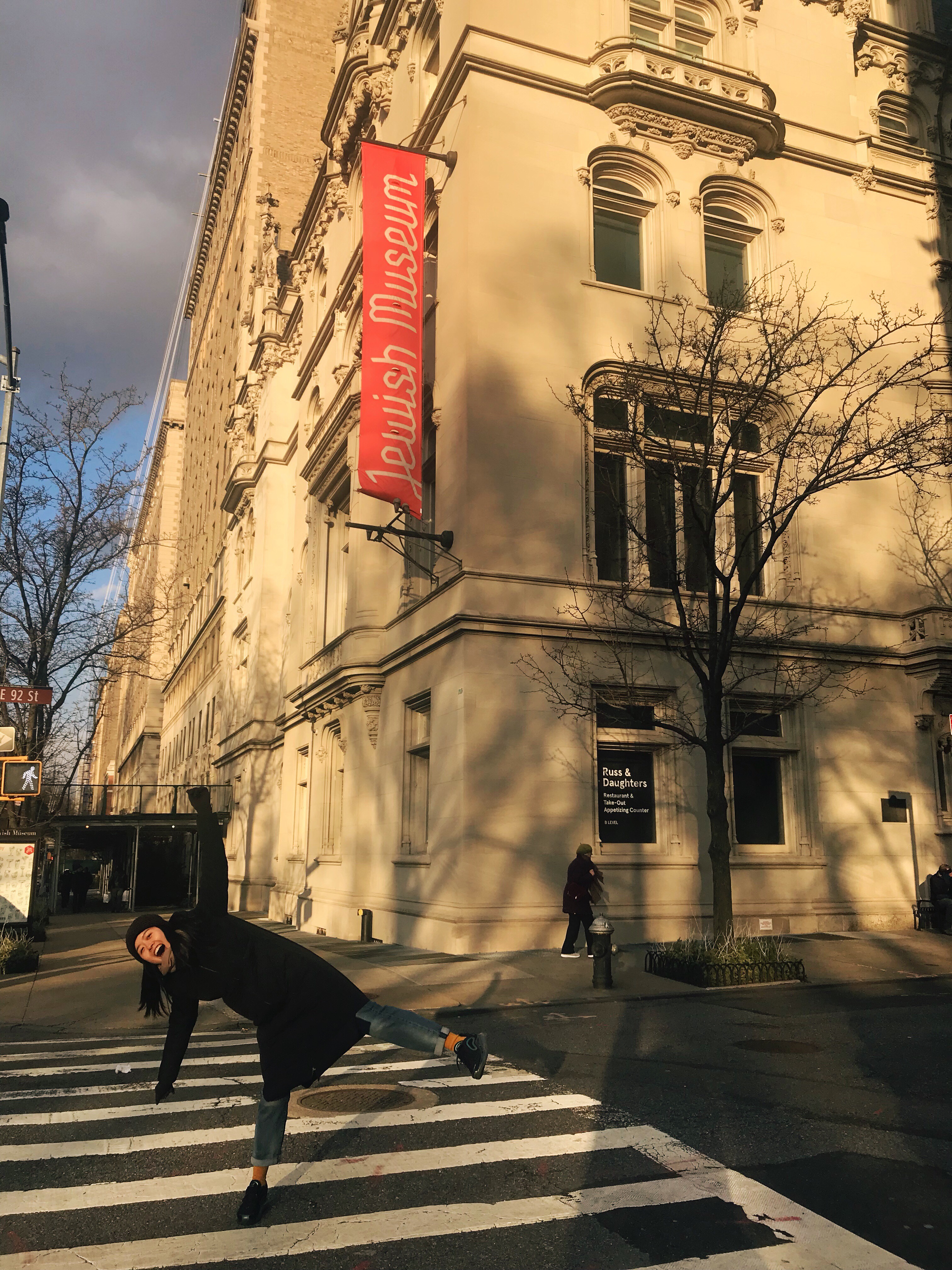
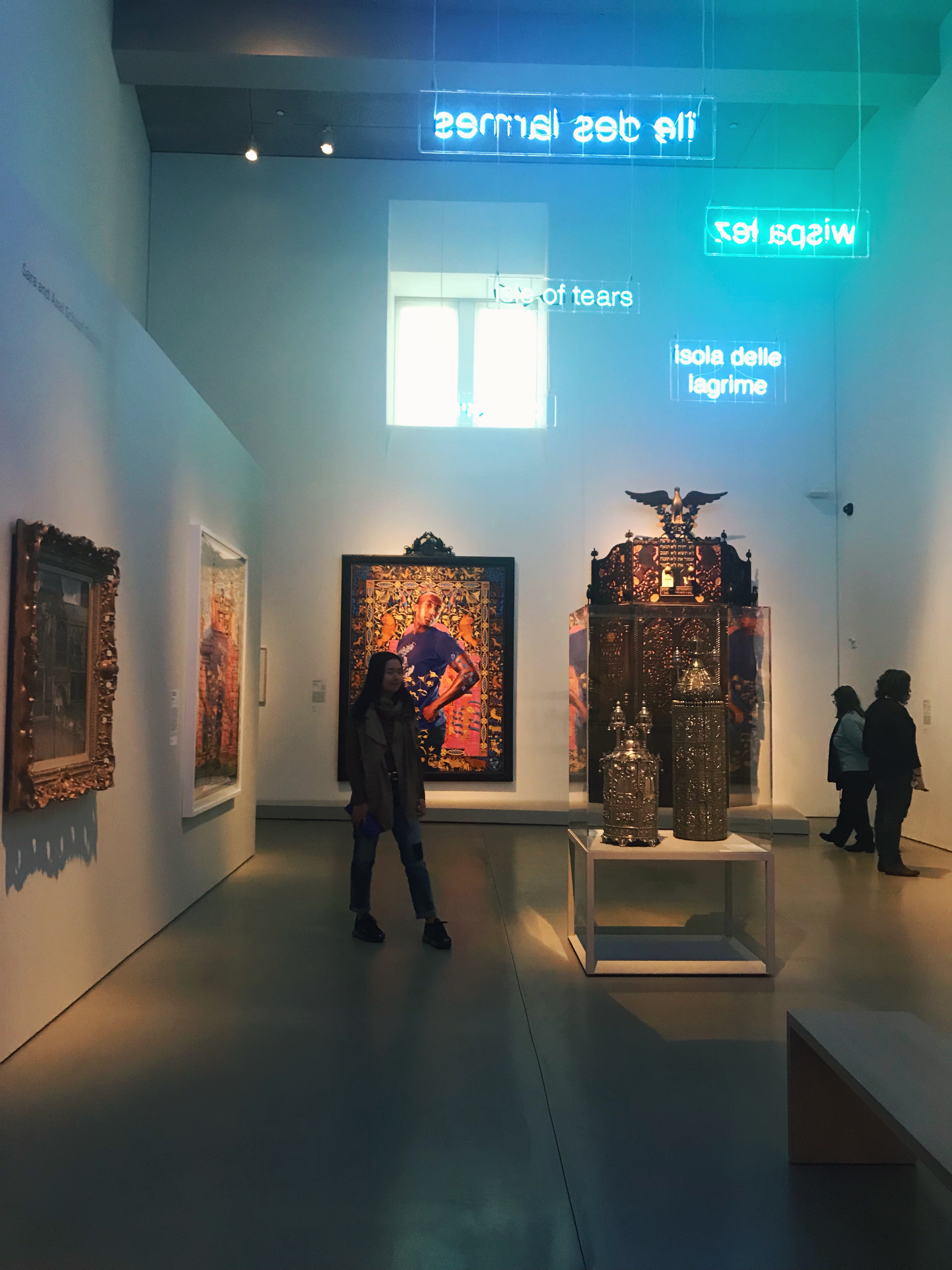
Yesterday, Cherrie and I went to the Jewish Museum together, but we almost didn’t go. Or to be exact, I almost didn’t go. On Friday I was feeling frazzled because I had broken my laptop and I was behind on homework and an application. (As a side note, despite the fact that the apple person said my computer was filled with water, I am currently typing on it until it blows up my face.) I felt like going to the museum would be a big ordeal and that I needed this weekend to catch up.

But Cherrie, good friend that she is, sent me a five-point list of why we should hang out and go to the museum, one point being “I just really wanna hang out with you as an old couple”.. and this is how we felt, walking through Central Park on a Saturday afternoon.

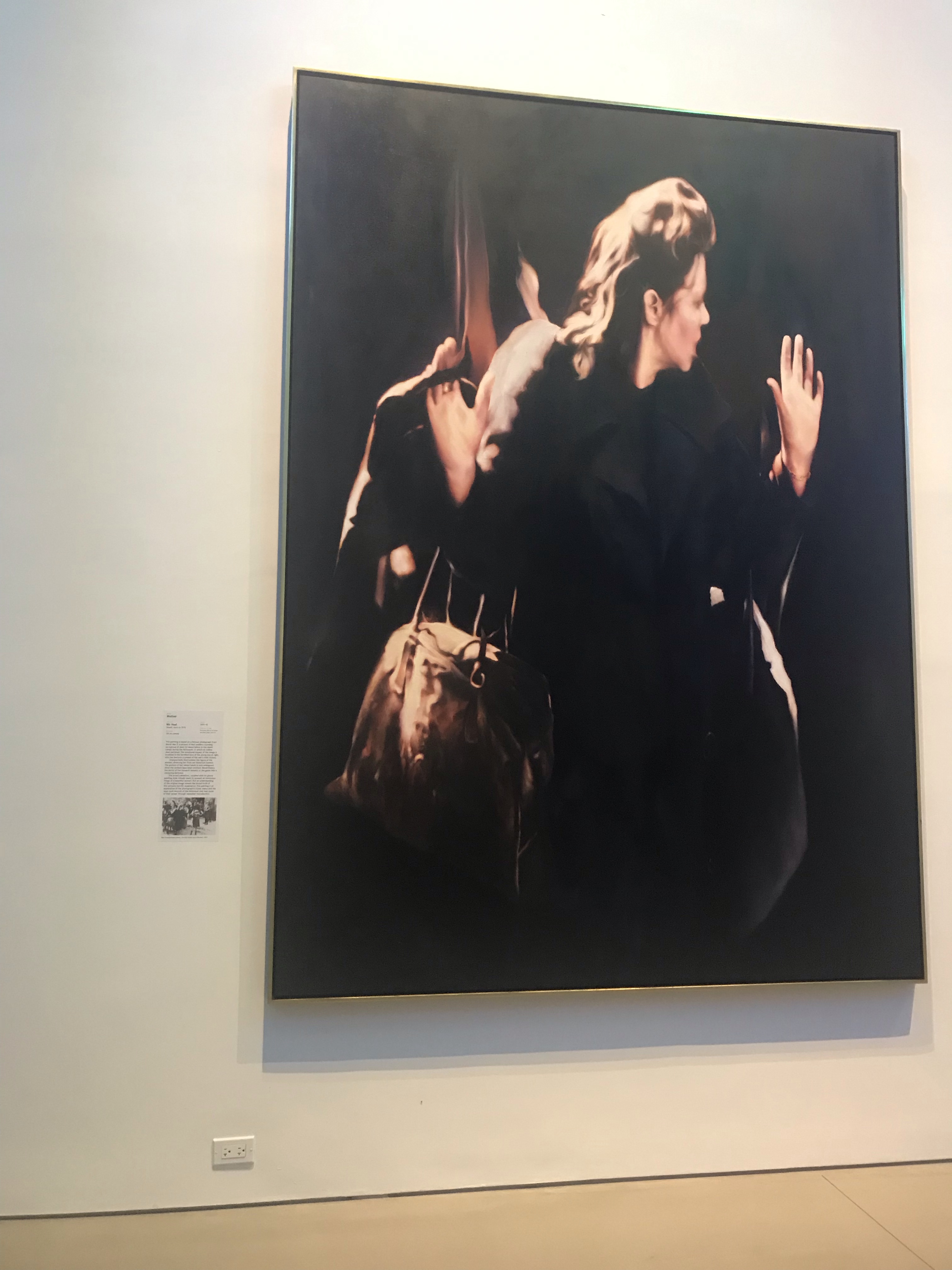
The museum was enlightening, the walk refreshing, and the funny thing was, time passed slower when we were together than when I was at the library.

Another friend of mine sent me the sweetest text this morning. This spring semester of junior year has been quite difficult already, but I am reminded for the 999th time that it is when I want to shut myself in my room that I need my friends most, and in fact I don’t know what I would do without them.

Can we tell I am a rather soppy human being?

Some more photos from Saturday, because Juliet and Cherrie are having a grand ‘ol time in the greatest city in the world (this is a Hamilton reference, I need to visit more cities before I could actually make this statement):

Juliet

oy! or yo!

Hello is too uptight, Hi is too boring, and Hey is too American. What about “Ahoy Sexy”?

Did you see Frances’ and Sophie’s reactions? Don’t startle and embarrass your friend. (Please get used to all the Greta Gerwig-related jokes starting from right now.)

Here are two more options:

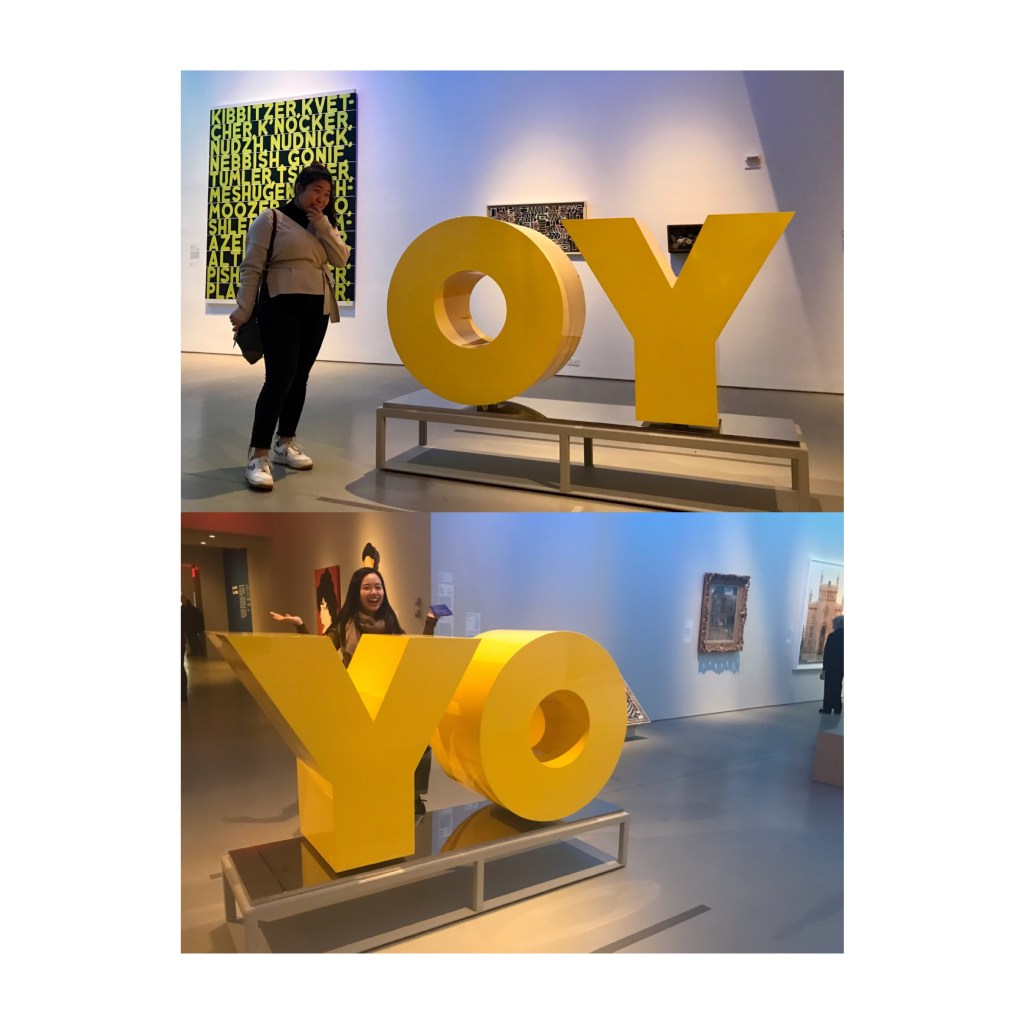
oy!

yo!

If you are a New Yorker, you’ve probably seen these two mustard letters way too many times, but have you thought about they might be sneakily changing your persona. When you burst out “oy” or “yo” next time, don’t cover your mouth and appear to be so surprised. You have successfully diversified your vocabularies and are en route to become a pro conversation starter.

Also, OY/YO has traveled all the way from Brooklyn to the Upper East Side – have you?

Cherrie